2014 Scripps National Spelling Bee kicks off!

The National Spelling Bee is finally here!

The 2014 Scripps National Spelling Bee has finally arrived!! Today spellers had to endure two rounds on stage in front of bright lights, a big crowd, cameras and reporters. Spellers have two minutes to spell their words. On stage, the spellers see a stoplight that changes colors depending on how much time they have left. Once the stoplight gets to red, it means they have 30 seconds to spell their word. I found this to be very nerve-racking when I stood on stage as a participant in the 2013 National Bee.

46 of the 281 spellers will proceed to the semifinals tomorrow morning at 10:00 a.m. EST on ESPN2. Semifinalists are chosen based on a combination of their score on a written spelling and vocabulary test taken yesterday and on stage spelling today. The highest combined scorers at the end of Round 3 advance; a maximum of 50 spellers are able to advance.

The championship finals are scheduled for tomorrow evening at 8:00 p.m. EST on ESPN.  My favorites to win this year are Vanya Shivashankar, a seventh grader from Kansas or Sriram Hathwar, an eighth grader from New York. This is Vanya’s fourth year at the Bee and she tied for fifth place last year. Sriram tied for third place last year and this is his fifth and final year of competition. Do you have a favorite?
 

ursprache (u̇ər shpräḵə)

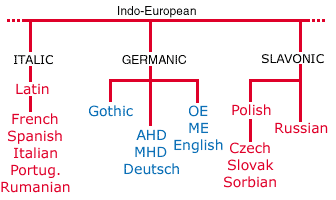
Proto-Indo-European is the ursprache of the Indo-European family of languages. Diagram from www.german.about.com

Katharine Close spelled the word ursprache to win the 2006 National Spelling Bee. Ursprache means a parent language, especially one reconstructed from the evidence of later languages.  Ursprache comes from the German roots ur meaning original and sprache meaning language. ProtoIndo-European is the ursprache, or the parent language of Indo-European languages such as Latin, Greek, Hindi and a lot of other languages.

euonym (yüənim)

Euonym was the winning word in the 1997 Scripps National Spelling Bee.

Hello! Our championship word for this week is euonym, which means an appropriate name for a person or thing. Euonym comes from the Greek roots eu-, meaning good, and -onym meaning name. Euonym simply means “good name.” Rebecca Sealfon, from New York, shouted each letter of this word ecstatically to win the 1997 National Spelling Bee. Check out the site below for a video of Rebecca Sealfon!

http://mom.me/fun/7505-9-funniest-spelling-bee-moments/item/e-u-o-n-y-m/

hydrophyte (hī-drə-fīt)

This picture was taken in Breaux Bridge, LA and shows a hydrophyte.

Hi again! To continue our theme of past championship words, let’s explore the word hydrophyte. This word was spelled by Julie Ann Junkin from Birmingham, Alabama to win the 1974 Scripps National Spelling Bee. A hydrophyte is a plant that grows in water. Hydrophyte comes from the Greek roots hydro, meaning water, and phyt, meaning plant.  It literally means “water plant!” An example of a hydrophyte is a water lily. Look for another post next week!

Hi everyone! I am really excited that the 2014 Scripps National Spelling Bee is coming up at the end of this month; the Bee is full of unique words and a LOT of drama. I thought that it would be nice to explore some past championship words. I will be posting the first word tomorrow. I hope you enjoy these wonderful words!  Are you planning to watch the Bee this year?

Chrysanthemum (kri-sant-thə-məm)

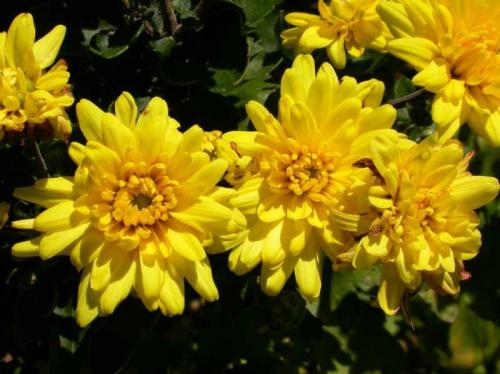
Chrysanthemums were originally yellow so they were named "gold flowers". (Photo credit to Missouri Botanical Garden)

I am sorry that I have kept you waiting for another post. This week we shall continue our theme of flower roots by looking at the word chrysanthemum. Chrysanthemums are fall-blooming flowers and can be multiple colors. Common names for chrysanthemums are chrysanths or mums. Chrysanthemum comes from the Greek roots chrys,meaning gold and anth, meaning flower. Chrysanthemums were originally yellow so they were named “gold flowers”.

campanula (kam-pan-yə-lə)

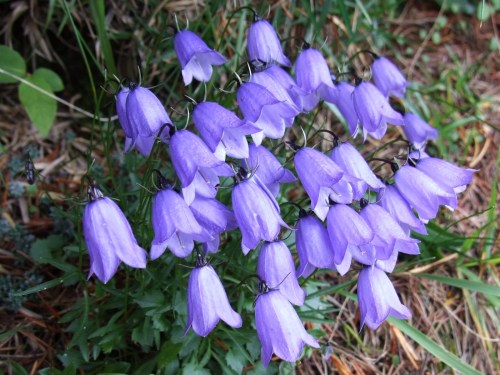
This picture shows the little bell shaped flowers of the campanula. (Photo credit to Wikipedia)

This week we will be exploring the word campanula, commonly known as the bellflower. Varieties of this plant include biennials, annuals and perennials. For those of you who may not know, a biennial plant is a plant that grows leaves, roots, and stems in its first year of development and flowers during the second year. The flowers of the plant come in many different colors, including white, lavender, pink and blue. Campanula comes from the Latin root campan, which means bell and includes the suffix -ula meaning little. As you can see in the picture, the flowers really do look like little bells.

hemerocallis (hemər-ō-kalə̇s)

Hemerocallis is a beautiful flower that blooms for just one day.

This week we shall explore the roots of another flower. The hemerocallis, better known as the daylily, is a perennial that comes in many different colors. These flowers are very pretty and some are fragrant. The word hemerocallis contains the Greek roots hemer, meaning day, and calli meaning beautiful. Greek roots are typically linked together by the letter “o”. The hemerocallis is the perfect name for these bright, beautiful flowers because they only bloom for one day.

aquilegia (a-kwə-lē-jē-ə)

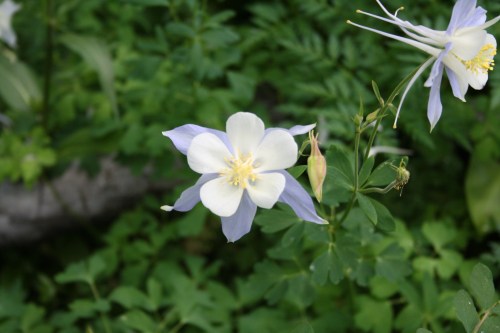
Rocky Mountain Columbine, the state flower of Colorado.

Spring is in the air and I decided to get to the roots of different flowers (yes, I know that’s a bad joke).  Let’s explore the word aquilegia, also known as columbine.  These beautiful flowers have delicate petals and have a star shape with yellow centers.  Some have long spurs that fan out behind the blossom.  Aquilegia comes from the Latin root aquil, meaning eagle. It is named this because the flower petals look like an eagle’s claw.  The Rocky Mt. Columbine, shown in the picture, has been Colorado’s state flower since 1899. Can you think of any words with the root aquil in them?