funambulist (fyu̇-ˈnam-byə-list)

A sketch of a funambulist drawn by my dad.

A funambulist is a tightrope walker. Funambulist contains the Latin roots fun– meaning rope and ambul– meaning walk. This word literally means “rope walker!” One of the most famous funambulists is Jean-Francois Gravelet, known as “The Great Blondin”. In 1859, he crossed the Niagara River on an 1100 foot rope. He crossed the river many times, each time doing something more dangerous. He ran and biked across, even in the dark! I think that his most amazing feat was when he rolled a wheelbarrow containing a stove, to the middle of the rope, stopped and cooked an omelet, then lowered the omelet to passengers in a boat below him! I don’t think that I could ever be a funambulist, because I would be too scared and probably end up falling!
psittacine (sitəˌsīn)

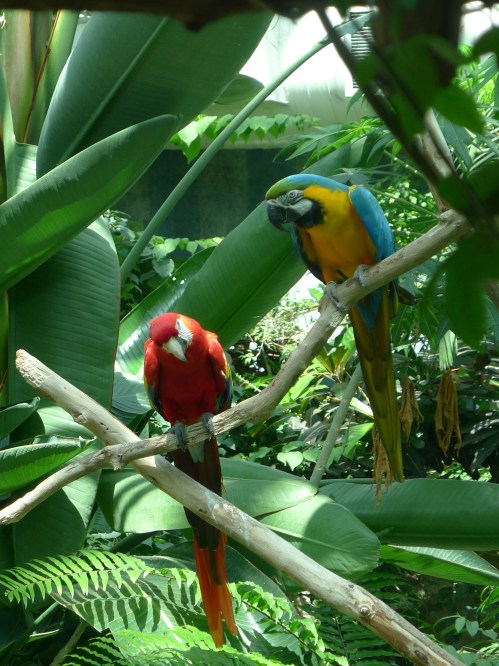
These colorful psittacines can be found at the Audubon Aquarium of the Americas in New Orleans.

A psittacine is any bird of the parrot family. Psittacine comes from the Greek root psitt, meaning parrot and includes the suffix ending “ine” which means “of or related to”.  Psittacine technically means, of or relating to parrots. I chose this word because it has an unusual root that doesn’t show up in many words, and the silent “p” makes it tricky to spell.

toxophilite (täk säfə līt)

I love the cool new bow I got for my birthday!

Yesterday was my first official day of summer vacation! I went to the archery range with my dad and we shot arrows together; it was fun! I am a true toxophilite. What is a toxophilite, you ask? A toxophilite is a lover of archery. Toxophilite is made up of two Greek roots, tox, meaning bow and phil, meaning love of. Two Greek elements usually link with “o.” Are you a toxophilite? If you are, let me know.

2014 National Spelling Bee Semifinals

The National Spelling Bee Stage before all of the spellers enter.

The National Spelling Bee Semifinals were amazing! All of the spellers at the Bee are encouraging and supportive of one another. When Syamantak Payra, an 8th grader from Texas, missed the word “circumforaneous” and was eliminated, the other spellers and the audience gave him a standing ovation because he was a finalist last year and could have won this year.

There were so many great words, but I found the following to be the most interesting:

1. gehenna – a place or state of misery.

2. urceiform – shaped like an ancient Roman jug or pitcher with one handle.

3. tachytely – evolution at a fast rate resulting in speedy differentiation of new types.

4. ananke – a personification of compelling necessity or ultimate fate to which even the gods must yield.

5. concinnate – put together with neat propriety.

6. laulau – meat and fish wrapped in leaves and baked or steamed.

7. ormolu – a brass used to imitate gold and is used for decoration.

8. cadelle – the larva or adult of a small black beetle destructive to stored grain and sometimes preying on other insects.

9. retrorse – bent backward or downward.

10. serictery – the silk-producing gland of a caterpillar.

I am off to go and watch the finals right now!

2014 Scripps National Spelling Bee kicks off!

The National Spelling Bee is finally here!

The 2014 Scripps National Spelling Bee has finally arrived!! Today spellers had to endure two rounds on stage in front of bright lights, a big crowd, cameras and reporters. Spellers have two minutes to spell their words. On stage, the spellers see a stoplight that changes colors depending on how much time they have left. Once the stoplight gets to red, it means they have 30 seconds to spell their word. I found this to be very nerve-racking when I stood on stage as a participant in the 2013 National Bee.

46 of the 281 spellers will proceed to the semifinals tomorrow morning at 10:00 a.m. EST on ESPN2. Semifinalists are chosen based on a combination of their score on a written spelling and vocabulary test taken yesterday and on stage spelling today. The highest combined scorers at the end of Round 3 advance; a maximum of 50 spellers are able to advance.

The championship finals are scheduled for tomorrow evening at 8:00 p.m. EST on ESPN.  My favorites to win this year are Vanya Shivashankar, a seventh grader from Kansas or Sriram Hathwar, an eighth grader from New York. This is Vanya’s fourth year at the Bee and she tied for fifth place last year. Sriram tied for third place last year and this is his fifth and final year of competition. Do you have a favorite?


ursprache (u̇ər shpräḵə)

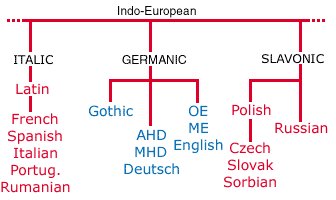
Proto-Indo-European is the ursprache of the Indo-European family of languages. Diagram from www.german.about.com

Katharine Close spelled the word ursprache to win the 2006 National Spelling Bee. Ursprache means a parent language, especially one reconstructed from the evidence of later languages.  Ursprache comes from the German roots ur meaning original and sprache meaning language. ProtoIndo-European is the ursprache, or the parent language of Indo-European languages such as Latin, Greek, Hindi and a lot of other languages.

euonym (yüənim)

Euonym was the winning word in the 1997 Scripps National Spelling Bee.

Hello! Our championship word for this week is euonym, which means an appropriate name for a person or thing. Euonym comes from the Greek roots eu-, meaning good, and -onym meaning name. Euonym simply means “good name.” Rebecca Sealfon, from New York, shouted each letter of this word ecstatically to win the 1997 National Spelling Bee. Check out the site below for a video of Rebecca Sealfon!

http://mom.me/fun/7505-9-funniest-spelling-bee-moments/item/e-u-o-n-y-m/

hydrophyte (hī-drə-fīt)

This picture was taken in Breaux Bridge, LA and shows a hydrophyte.

Hi again! To continue our theme of past championship words, let’s explore the word hydrophyte. This word was spelled by Julie Ann Junkin from Birmingham, Alabama to win the 1974 Scripps National Spelling Bee. A hydrophyte is a plant that grows in water. Hydrophyte comes from the Greek roots hydro, meaning water, and phyt, meaning plant.  It literally means “water plant!” An example of a hydrophyte is a water lily. Look for another post next week!

Chrysanthemum (kri-sant-thə-məm)

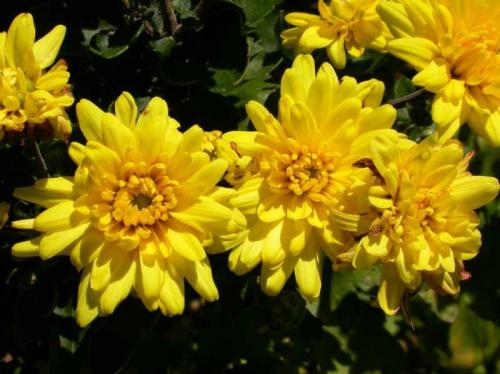
Chrysanthemums were originally yellow so they were named "gold flowers". (Photo credit to Missouri Botanical Garden)

I am sorry that I have kept you waiting for another post. This week we shall continue our theme of flower roots by looking at the word chrysanthemum. Chrysanthemums are fall-blooming flowers and can be multiple colors. Common names for chrysanthemums are chrysanths or mums. Chrysanthemum comes from the Greek roots chrys,meaning gold and anth, meaning flower. Chrysanthemums were originally yellow so they were named “gold flowers”.

campanula (kam-pan-yə-lə)

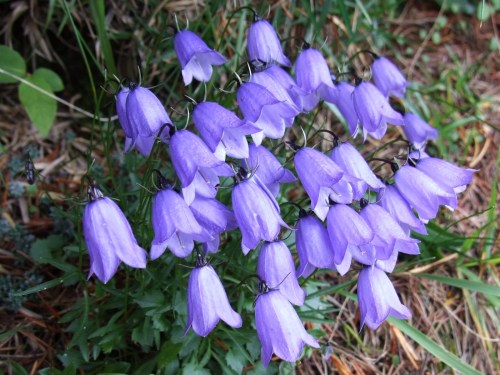
This picture shows the little bell shaped flowers of the campanula. (Photo credit to Wikipedia)

This week we will be exploring the word campanula, commonly known as the bellflower. Varieties of this plant include biennials, annuals and perennials. For those of you who may not know, a biennial plant is a plant that grows leaves, roots, and stems in its first year of development and flowers during the second year. The flowers of the plant come in many different colors, including white, lavender, pink and blue. Campanula comes from the Latin root campan, which means bell and includes the suffix -ula meaning little. As you can see in the picture, the flowers really do look like little bells.