nix (niks)

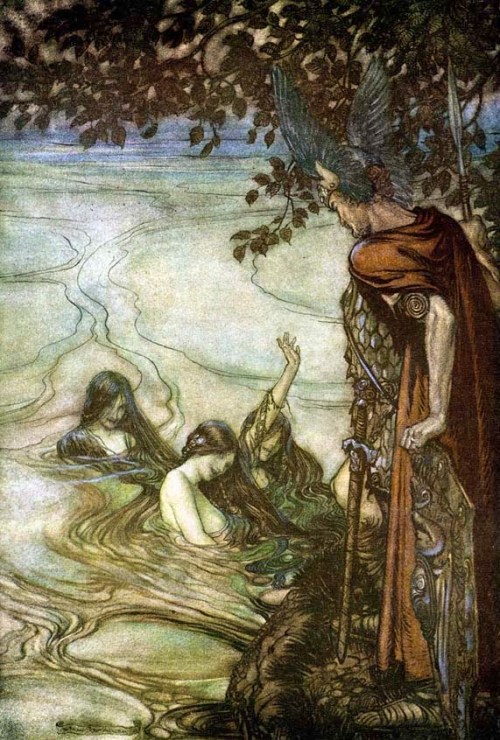
Nixes are water spirits who lure people to their watery graves. (Painting by Arthur Rackham, image from www.wikipedia.org)

Our first monster is a malevolent creature from Germanic folklore. Nixes are water spirits that live in rivers and lakes and lure people into the water to their deaths.

Nixes can take on many forms; males can shapeshift into humans, snakes, or fish, while females are commonly portrayed as beautiful women with the tail of a fish. A famous nix was the beautiful Lorelei, who perched atop a rock on the Rhine River and lured fishermen to their doom with the sound of her voice.

Beware the next time you go swimming in a lake, or else you might end up becoming a victim of a nix.

Coming Soon: Creature Feature

creature-feature-1

Artwork by my talented friend Lauren Prys

Halloween is almost upon us and I am so excited!

In honor of my favorite holiday, every week this month I will unveil a scary creature guaranteed to make you shriek in fright and lock your doors at night.

The first Creature Feature will be posted on October 8, so be sure to return to explore the morbid monster of the week. In the meantime, feel free to peruse my other Halloween related posts under the category “phobias.”

koekje (cook-yuh)

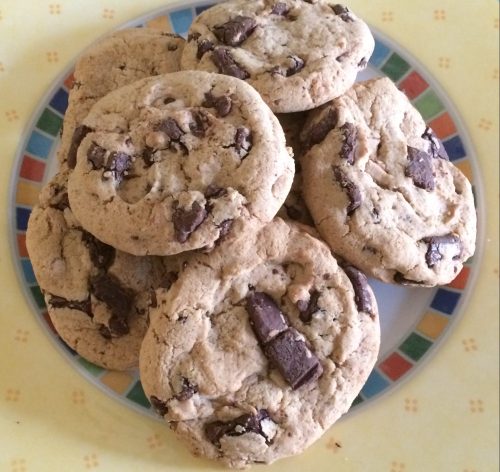
The chocolate chip cookie was invented by Ruth Wakefield in 1937.

Every country has its own word for “cookie,” a sweet confection that can be soft or crisp. The word “cookie” comes from koekje, a Dutch word that means “little cake.” Dutch immigrants brought the word “koekje” to North America when they began to settle in New Amsterdam (later called New York city) in the early 1600s. Koekje eventually became anglicized to “cookie”; the first known usage of the word occurs in 1703.

The most popular variety of cookie in the United States is chocolate chip. In 1937, Ruth Wakefield accidentally created the chocolate chip cookie when she substituted chunks of semi-sweet chocolate for powdered chocolate in a butter cookie recipe. Wakefield assumed that the chocolate chunks would melt like the powdered chocolate, but instead, the chunks retained their shape. Thus, the chocolate chip cookie was born! In 1939, Betty Crocker mentioned the chocolate chip cookie on a radio show, making it nationally famous.

If you are a resident of a country outside the U.S.A., what word do you use to refer to “cookie”? What is your favorite type of cookie?                                                                                                                                                                 

Sources:
History of Cookies. http://www.whatscookingamerica.com
Cookie. http://www.wikipedia.com
http://www.dictionary.com

gifblaar (gifˌblär)

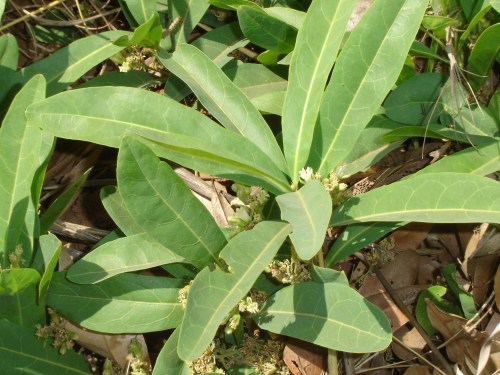
Gifblaar is a poisonous plant that is fatal to cattle in Southern Africa. (Image from en.wikipedia.org)

Hello everyone! Today, I’ve chosen to post about an unusual word from Afrikaans.

Afrikaans is an Indo-European language and is specifically part of the West Germanic language tree. It is the official language of South Africa and Namibia and is spoken by millions of people. Afrikaans is descended from Dutch, therefore, these two languages have similar language patterns. It is interesting to note that people who speak Afrikaans can also understand Dutch.

The word gifblaar comes from the Afrikaans roots gif, meaning poison, and blaar meaning leaf. The English translation for this word is “poison leaf.” Gifblaar is a poisonous plant native to Southern Africa and is toxic to cattle, causing death within hours of ingestion.


xenolinguist (zenə-liŋgwə̇st)

Nyota Uhura was portrayed by  Nichelle Nicols in the original Star Trek. Zoe Saldana currently portrays Uhura in the newer Star Trek movies. (Image from rottentomatoes.com)
Nyota Uhura was portrayed by Nichelle Nicols in the original Star Trek. Zoe Saldana currently portrays Uhura in the newer Star Trek movies. (Image from rottentomatoes.com)

Star Trek Beyond was released a few days ago and I couldn’t resist writing about one of my favorite Star Trek characters, Nyota Uhura. Lieutenant Uhura is the chief communications officer on the USS Enterprise. She is an expert in xenolinguistics and can speak and understand many alien languages, including Klingon and Romulan.

Xenolinguist comes from the Greek roots xeno-, meaning foreign, and lingu- meaning tongue. A xenolinguist is someone who is skilled in foreign languages, or in this case, alien languages.

I love this character because she is smart, resourceful, and strong.  Additionally, we both have a lot in common. We share a love of linguistics and our first names both mean “star.” Nyota means “star” in Swahili and Tara means “star” in Sanskrit. I would love to be a xenolinguist when I grow up!

Name That Animal: Challenge #4


zebraworth10000

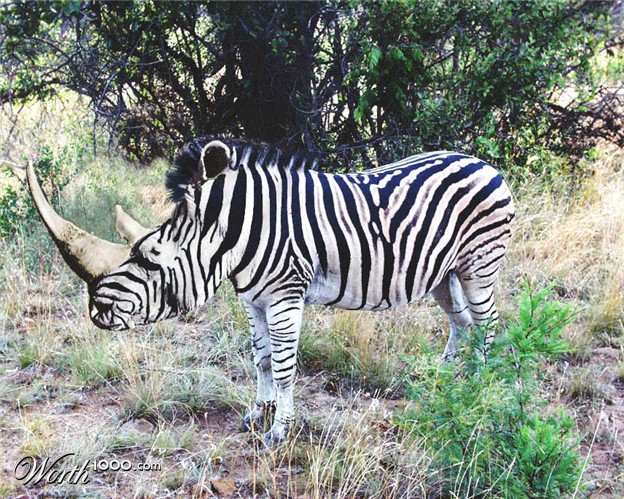
What would you name this fantastic creature?

I thought a Name That Animal Challenge would be a fun way to commemorate my 100th blog post!

Pretend that you are a scientist and you have just discovered this new animal and you have the privilege of naming this unusual species. Scientists usually name new species by using Greek or/and Latin roots because the prefixes, stems, and suffixes are just like building blocks that you can utilize in countless ways.

Your challenge is to name the unique animal in the picture above using your knowledge of Greek and Latin roots. Keep in mind that you can use characteristics like size, color, or shape to name the animal. Feel free to search my blog to find root words to help you or use the list below.

Greek:

hippo-, -hippus                             horse

cerat                                                   horn

morph                                               form, shape

cephal                                               head

Latin:

equi-, -equus                                 horse

corp                                                   body

ungul-, ungula                              hoof


I came up with biceratohippus or two horned horse. The letter “o” is the most common way to link Greek roots, while the letter “i” is used to link Latin roots. However, you can do whatever you like and have fun!

If you enjoyed this activity,  try  Name That Animal Challenge #1, Name That Animal Challenge #2,  and Name That Animal Challenge #3.


Sicca syndrome

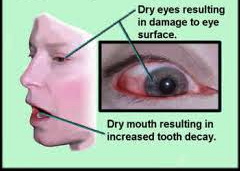
Sicca syndrome results in xerophthalmia and xerostomia. (Image from lookfordiagnosis.com)

Throughout this summer, let’s continue to explore medical words since they are a rich source of roots. Sicca syndrome is a condition in which the body exhibits signs and symptoms of extreme dryness because of abnormalities which occur with various glands.

The most common cause of Sicca syndrome is the autoimmune disease called *Sjogren’s (shōgrən) syndrome. Certain drugs, prior radiation therapy to the head, and hepatitis have also caused this syndrome.

Sicca (sikə) comes from the Latin word siccus, meaning dry. However, many symptoms are described by Greek roots. For example, patients can have xerostomia (zirəˈstōmēə) and xerophthalmia (ziˌräfˈthalmēə). The Greek root xero– means dry. The Greek roots stoma and ophthalmo mean mouth and eye respectively. Xerophthalmia  means “dry eyes” and xerostomia means “dry mouth.”

*after H.S.C. Sjögren, Swedish ophthalmologist

myasthenia (mīəsˈthēnēə)

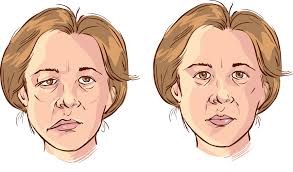
This picture shows many symptoms characteristic of myasthenia. Note ptosis of the eyes and facial drooping due to muscle weakness. Image from health.facty.com


I apologize for the lengthy delay between posts. I have been very busy studying for the 2016 Scripps National Spelling Bee (more on that later)! To continue our medical theme, let’s explore the word myasthenia, which is a disease that causes muscle weakness in multiple organs.

Myasthenia, commonly known as myasthenia gravis, occurs when the body makes antibodies to nerve receptors, preventing them from telling muscles to contract correctly. Symptoms get worse with repetitive activity and improve with rest.

This disease affects many parts of the body. For example, in the eye, it causes ptosis (drooping of the eyelid) and diplopia (double vision). It can cause weakness in the jaw muscles, resulting in dysphagia (trouble swallowing). The voice can be affected with dysarthria (difficulty speaking). Rarely, myasthenia can affect the diaphragm muscle and result in breathing paralysis.

Myasthenia comes from the Greek roots myo-, meaning muscle, and -asthenia, meaning weakness. Myasthenia literally means “muscle weakness,” which aptly describes this affliction.


tantalize (tan-tə-līz)

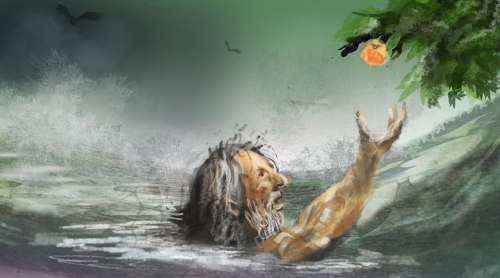
Tantalus reaches for a fruit that he will never be able to reach, while standing in water that he will never be able to drink. (Image by xenomorph from greekmythology.com)

Many of you are probably familiar with the word tantalize, but you may not know of its origin in Greek mythology.

Tantalus was Zeus’s son. The gods favored Tantalus so much that they invited him to a grand feast on Mount Olympus itself. To return the favor, Tantalus hosted a feast in his palace. Although he was a very rich king, nothing seemed good enough for his most honored guests. His most beloved treasure was his son, Pelops. Therefore, Tantalus decided to kill Pelops and make a stew with Pelops as the main ingredient. When he offered this delightful meal to the gods, they were angry, for the gods of Olympus hated human sacrifice.

The Olympians punished Tantalus by throwing him in the Fields of Punishment to suffer forever. He was condemned to stand in water up to his neck with branches of fruit hanging over him. Whenever he stooped to drink, the water would quickly recede and whenever he reached for the succulent fruit overhead, the branch would bend out of reach.

Pelops was resurrected by the gods. However, one of his shoulder bones was missing because Demeter, grief-stricken by the loss of her daughter Persephone (who was kidnapped by Hades), accidentally took a bite of the stew. The gods replaced his shoulder bone with a piece of ivory and gave him majestic gifts.

Tantalize is a verb meaning “to tease or torment by presenting something to the view and exciting desire but continually frustrating the expectations by keeping it out of reach“(Merriam Webster).

Scylla and Charybdis

Scylla and Charybdis were terrible monsters!

Happy New Year everyone! Have you ever noticed that many terms we use in the English language are from Greek mythology? For example, being caught between Scylla and Charybdis means that you must make a choice between two equally unpleasant options.

The hero of Homer’s Odyssey, Odysseus, is faced with many challenges on his way home to Ithaca after the Trojan War. One terrible choice he had to make was deciding which monster, Scylla or Charybdis, was the lesser of two evils. “Charybdis sucked down the sea three times a day and three times vomited it up again – a whirlpool in which no ship might live. And in a cave, midway up the right-hand rock another monster, Scylla by name, had her lair. She had six heads on long thin scaly necks, and in each mouth three rows of grinding teeth and twelve long feelers with claws at their ends, with which she caught her prey: big fish or dolphins – or men if any passed that way (Page 41)”. Odysseus chooses Scylla, losing six of his men along the way; this was better than losing his entire crew and ship.

Have you ever been caught between Scylla and Charybdis? In a famous song by The Police, Scylla and Charybdis are mentioned; do you know the name of the song?

*Quote cited from The Wanderings of Odysseus by Rosemary Sutcliff.