cynophilist (sī-näfələ̇st)

Happy Valentine’s Day! We have a new love in our lives and I have been very excited to write this post for many months. In September of 2016, we brought home a 12-week-old Tibetan Spaniel puppy. We named her Coco Cuddles, and she is adorable, sweet, and cuddly.

Tibetan Spaniels are a rather uncommon breed, but we have found that this particular breed suits our family perfectly. Coco is loving, lively, alert, smart, playful, and sometimes mischievous. As their name would suggest, Tibetan Spaniels originated in Tibet. They are a very old breed; they are depicted in Asian art dating back to 1100 BC.

Tibetan Spaniels can be many different colors with various markings, but our Coco is  parti colored, meaning that she is a mix of different colors – she is white with light sable markings. She is almost 8 months old now and weighs 8 pounds. Her adult weight will be between 13 and 15 pounds, so she won’t really gain much more weight.

By now, you’ve probably guessed that the word cynophilist has something to do with dogs! Cynophilist comes from the Greek roots cyn-, meaning dog, and phil-, meaning love so the word means “dog lover.”

Are any of you cynophilists?

To see more pictures of baby Coco, go to Briallu Tibetan Spaniels – Coco’s litter name was Penelope.

lethifold (lēthə-fōld)

A Lethifold is shroud of darkness that preys upon sleeping wizards or Muggles. (image from www.moviepilot.com)

In Fantastic Beasts and Where To Find Them, Newt Scamander states that a Lethifold is a very rare creature that dwells in tropical climates. A Lethifold looks like a black cloak that floats along ominously during the night seeking victims who are sleeping. Once its prey has been suffocated thoroughly, it simply digests them in their beds, leaving no trace of its victims.

Since Lethifolds are stealthy killers, it is difficult to find much information about them. However, Flavius Belby, who survived a Lethifold attack, wrote the earliest account of Lethifolds in 1782. During the attack, Belby writes that he tried to overcome the Lethifold by using a Stupefying Charm and an Impediment Hex, neither of which worked. Finally, Belby cast the Patronus Charm, which repelled the Lethifold successfully.

The Ministry of Magic rates these highly dangerous creatures XXXXX, meaning that they are known to kill wizards and it is not possible to train or domesticate them.

Lethifold contains the Latin root leth-, meaning deadly or fatal. Leth- was probably influenced by the Greek word “lethe,” referring to the mythological river in the Underworld whose waters caused spirits to forget everything about their former lives. It makes sense that the word “lethe” would later influence the Latin “leth-” because if a person forgets who he is and loses all his memories, he loses his sense of self which is similar to death.  Since the Lethifold is a deadly creature, this name seems apropos.

Join me next week as we continue exploring fantastic creatures from the Harry Potter world. I hope you are all enjoying these posts as much as I am enjoying writing them!

augurey (ȯ-gyərē)

The augurey is a greenish-black bird that was once thought to foretell death. (image from playbuzz.com)

According to Newt Scamander, author of Fantastic Beasts and Where To Find Them, the Augurey is a bird that primarily dwells in Britain and Ireland. This bird resembles a small, malnourished, greenish-black vulture. This melancholic bird is very shy and only comes out of its tear-shaped nest during heavy rains.

One can distinguish an Augurey by its low, throbbing cry that was once believed to foreshadow death. However, researchers have refuted that idea, and have discovered that the Augurey only sings when rain is approaching. The Ministry of Magic classifies the Augurey as XX, meaning that it is harmless and can be domesticated.

The bird’s name probably comes from the word “augury,” which is the practice of interpreting the flight patterns of birds. Romans believed that the gods expressed their will through various signs in nature. They believed that nothing important should be done without the blessing of the gods so they appointed augurs, a special group of priests, to divine the will of the gods by observing and interpreting the signals of birds.  “Augur” comes from the Latin word “auspex”, which literally means “one who takes signs from the birds.”

Come back next week for another fantastic beast!

quintaped (kwint-əped)

The Quintaped is a highly dangerous, carnivorous wizard-killer that should be avoided at all costs. (image from harrypotter.wikia.com)

In Fantastic Beasts and Where To Find Them, Newt Scamander describes the “quintaped” as a  “highly dangerous carnivorous beast with a particular taste for humans” (pg. 67).

The Quintaped is commonly found in northern Scotland, on the Isle of Drear. According to legend, there were two wizarding families that lived on the Isle of Drear, the McCliverts and the MacBoons. The leaders of each of these clans faced off in a duel, which ultimately led to the death of the McClivert chief. To avenge their leader’s death, the McCliverts transfigured every single MacBoon into a horrible five-legged beast.

Unfortunately for the McCliverts, the transfigured MacBoons were even more dangerous in their new form. The MacBoons ended up killing all of the McCliverts. The MacBoons remained in this monstrous state for there were no remaining wizards left to change them back into their former selves.

The Department for the Regulation and Control of Magical Creatures has attempted to capture and un-transfigure a Quintaped to no avail. The Ministry of Magic has classified Quintapeds as XXXXX, meaning that they are “known wizard killers” and are “impossible to domesticate or train” (pg. xxxv).

Quintapeds are aptly named, the Latin root quint- means five while –ped means foot. Interestingly enough, the leader of clan MacBoon was named “Quintius,” which might explain why they were transfigured into five-legged creatures.

Name That Animal: Challenge #5

What would you name this fantastic beast? (Image from Pinterest)

I haven’t published a Name That Animal Challenge in several months, so here you go!

Pretend that you are a scientist and you have just discovered a new animal and you have the privilege of naming this unusual species. Scientists typically name new species by using Greek or/and Latin roots because the prefixes, stems, and suffixes are just like building blocks that you can use in countless ways.

Your challenge is to name the interesting animal in the picture above using your knowledge of Greek and Latin roots. Keep in mind that you can use characteristics like size, color, or shape to name the animal. Feel free to search my blog to find root words to help you or use the list below.

Greek:

hippo-, -hippus                             horse

morph                                               form, shape

cephal                                               head

pter                                                    wing

Latin:

equi-, -equus                                 horse

corp                                                body

ungul-, ungula                              hoof

capit                                                head

ali-, al-                                            wing

avi-, av-                                          bird

I came up with hippopter or winged horse. The letter “o” is the most common way to link Greek roots, and the letter “i” is used to link Latin roots. However, you can do whatever you like and enjoy!

It’s not too late to participate in my  Name That Animal Challenge #1, Name That Animal Challenge #2,  and Name That Animal Challenge #3, and Name That Animal Challenge #4.

psephology (sēˈfäləjē)

Today is a historic day in the United States because a new president will be elected. Psephologists everywhere will be trying to analyze and predict the outcome of this year’s election.

Psephology comes from the Greek roots pseph– meaning pebble, and –logy, meaning study of. Logically, psephology should then be the study of pebbles or perhaps rocks. However, psephology is actually the study of voting and elections.

This may not initially make sense, until you realize that the Ancient Greeks utilized pebbles to vote for public officials. The Greeks would deposit a pebble into an urn to indicate the candidate they wished to elect.

You might also be interested in the derivation of two other words related to elections – candidate and vote. The word candidate comes from the Latin word candidatus, which literally means “clothed in white.” In ancient Rome, a person seeking a public office would wear a toga whitened with chalk. The word candidate came into the English language at the beginning of the 17th century.

The word vote ultimately comes from the Latin word votum, which means a vow or a wish. This could mean that when people cast a vote, they are wishing for a better future and hoping that the candidate that they are voting for will do everything in their power to honor their promises or vows.

Even though I am not old enough to vote, I will be accompanying my parents as they cast their votes today!

LEGO (lā-gō)

Many months ago, my family and I visited the Museum of Science and Industry in Chicago, Illinois. While we were there, we spent a majority of the time at the Brick by Brick exhibit. This exhibit featured gargantuan LEGO-built structures of famous landmarks from all around the world.

These buildings were awe-inspiring in their extreme attention to detail; each structure was made with thousands of LEGO bricks. My favorite structures were the Golden Gate Bridge, the Pyramids of Egypt, and the Colosseum in Rome.

LEGO is an abbreviation that comes from the Danish words leg and godt, which mean “play well.”  In Latin, “lego” means “I choose.” This seems to be the perfect name for a company that allows children of all ages to play with their product in any way they choose- limited only by their imaginations.

xenolinguist (zenə-liŋgwə̇st)

Nyota Uhura was portrayed by  Nichelle Nicols in the original Star Trek. Zoe Saldana currently portrays Uhura in the newer Star Trek movies. (Image from rottentomatoes.com)
Nyota Uhura was portrayed by Nichelle Nicols in the original Star Trek. Zoe Saldana currently portrays Uhura in the newer Star Trek movies. (Image from rottentomatoes.com)

Star Trek Beyond was released a few days ago and I couldn’t resist writing about one of my favorite Star Trek characters, Nyota Uhura. Lieutenant Uhura is the chief communications officer on the USS Enterprise. She is an expert in xenolinguistics and can speak and understand many alien languages, including Klingon and Romulan.

Xenolinguist comes from the Greek roots xeno-, meaning foreign, and lingu- meaning tongue. A xenolinguist is someone who is skilled in foreign languages, or in this case, alien languages.

I love this character because she is smart, resourceful, and strong.  Additionally, we both have a lot in common. We share a love of linguistics and our first names both mean “star.” Nyota means “star” in Swahili and Tara means “star” in Sanskrit. I would love to be a xenolinguist when I grow up!

pacific (pəˈsifik)

Last week, my family and I went on a relaxing vacation to beautiful Monterey, California. Monterey, a small seaside city on the central coast of California, is one of my favorite places to visit because of the mild weather and beautiful beaches. My sister and I love to stroll on the beach and hunt for sea glass that washes up from the Pacific Ocean.

The Pacific Ocean is the biggest ocean on Earth, covering 59 million square miles and containing more than half of the free water on Earth. The Portuguese explorer Ferdinand Magellan is responsible for naming this large body of water in 1520. Because of the calmness of the water, he named the newfound ocean “pacific.”

Pacific comes from the Latin root word pac- meaning peace or calm . The Latin suffix -fic means to make or do. The word “pacific” literally means “to make peaceful.” The word “pacific” is both a noun and an adjective. As a noun, the word refers to the “Pacific Ocean,” but when used as an adjective it means calm or tranquil.

myasthenia (mīəsˈthēnēə)

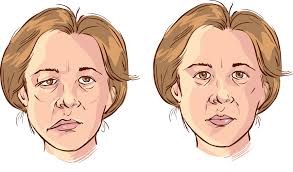
This picture shows many symptoms characteristic of myasthenia. Note ptosis of the eyes and facial drooping due to muscle weakness. Image from health.facty.com


I apologize for the lengthy delay between posts. I have been very busy studying for the 2016 Scripps National Spelling Bee (more on that later)! To continue our medical theme, let’s explore the word myasthenia, which is a disease that causes muscle weakness in multiple organs.

Myasthenia, commonly known as myasthenia gravis, occurs when the body makes antibodies to nerve receptors, preventing them from telling muscles to contract correctly. Symptoms get worse with repetitive activity and improve with rest.

This disease affects many parts of the body. For example, in the eye, it causes ptosis (drooping of the eyelid) and diplopia (double vision). It can cause weakness in the jaw muscles, resulting in dysphagia (trouble swallowing). The voice can be affected with dysarthria (difficulty speaking). Rarely, myasthenia can affect the diaphragm muscle and result in breathing paralysis.

Myasthenia comes from the Greek roots myo-, meaning muscle, and -asthenia, meaning weakness. Myasthenia literally means “muscle weakness,” which aptly describes this affliction.