myasthenia (mīəsˈthēnēə)

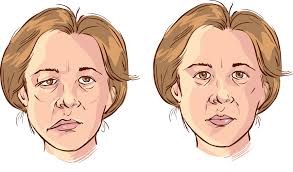
This picture shows many symptoms characteristic of myasthenia. Note ptosis of the eyes and facial drooping due to muscle weakness. Image from health.facty.com


I apologize for the lengthy delay between posts. I have been very busy studying for the 2016 Scripps National Spelling Bee (more on that later)! To continue our medical theme, let’s explore the word myasthenia, which is a disease that causes muscle weakness in multiple organs.

Myasthenia, commonly known as myasthenia gravis, occurs when the body makes antibodies to nerve receptors, preventing them from telling muscles to contract correctly. Symptoms get worse with repetitive activity and improve with rest.

This disease affects many parts of the body. For example, in the eye, it causes ptosis (drooping of the eyelid) and diplopia (double vision). It can cause weakness in the jaw muscles, resulting in dysphagia (trouble swallowing). The voice can be affected with dysarthria (difficulty speaking). Rarely, myasthenia can affect the diaphragm muscle and result in breathing paralysis.

Myasthenia comes from the Greek roots myo-, meaning muscle, and -asthenia, meaning weakness. Myasthenia literally means “muscle weakness,” which aptly describes this affliction.


osteopoikilosis (ästēōpȯikə̇lōsə̇s)

My dad is a radiologist and he suggested that we start our medical theme with the word osteopoikilosis. Some diseases are best shown with medical imaging, which is what my dad is an expert in. This disease is a great example.

Osteopoikilosis is also known as “spotted bone disease.” Bone is made of two major parts: the cortical bone, which is on the outside, and the medullary bone, which is on the inside. When cortical bone forms islands inside the medullary bone in multiple locations in the body, osteopoikilosis occurs.

The disease is associated with symptoms such as joint pains, rashes, syndactyly (when digits fuse together), and dwarfism. It has a characteristic look on x-ray with bone islands concentrated around joints.

Osteopoikilosis comes from the Greek roots osteo- meaning bone, and poikilo- meaning spotted or variegated. The suffix -osis meaning condition of. Osteopoikilosis literally means “condition of spotted bone.”

On Saturday I won the Kentucky Derby Festival’s 23rd annual spelling bee! It was an exciting moment for me and I felt honored to be on stage with so many other great spellers. Congratulations to all the county champions who competed on Saturday!

10-Year-Old wins Derby Festival spelling bee

Louisville girl wins KY Derby Festival’s Spelling Bee


tantalize (tan-tə-līz)

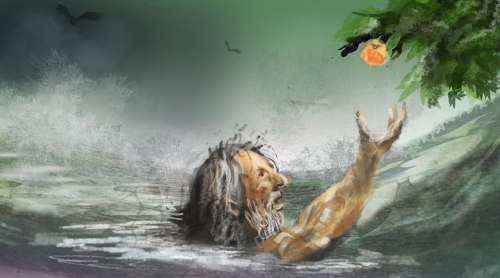
Tantalus reaches for a fruit that he will never be able to reach, while standing in water that he will never be able to drink. (Image by xenomorph from greekmythology.com)

Many of you are probably familiar with the word tantalize, but you may not know of its origin in Greek mythology.

Tantalus was Zeus’s son. The gods favored Tantalus so much that they invited him to a grand feast on Mount Olympus itself. To return the favor, Tantalus hosted a feast in his palace. Although he was a very rich king, nothing seemed good enough for his most honored guests. His most beloved treasure was his son, Pelops. Therefore, Tantalus decided to kill Pelops and make a stew with Pelops as the main ingredient. When he offered this delightful meal to the gods, they were angry, for the gods of Olympus hated human sacrifice.

The Olympians punished Tantalus by throwing him in the Fields of Punishment to suffer forever. He was condemned to stand in water up to his neck with branches of fruit hanging over him. Whenever he stooped to drink, the water would quickly recede and whenever he reached for the succulent fruit overhead, the branch would bend out of reach.

Pelops was resurrected by the gods. However, one of his shoulder bones was missing because Demeter, grief-stricken by the loss of her daughter Persephone (who was kidnapped by Hades), accidentally took a bite of the stew. The gods replaced his shoulder bone with a piece of ivory and gave him majestic gifts.

Tantalize is a verb meaning “to tease or torment by presenting something to the view and exciting desire but continually frustrating the expectations by keeping it out of reach“(Merriam Webster).

Scylla and Charybdis

Scylla and Charybdis were terrible monsters!

Happy New Year everyone! Have you ever noticed that many terms we use in the English language are from Greek mythology? For example, being caught between Scylla and Charybdis means that you must make a choice between two equally unpleasant options.

The hero of Homer’s Odyssey, Odysseus, is faced with many challenges on his way home to Ithaca after the Trojan War. One terrible choice he had to make was deciding which monster, Scylla or Charybdis, was the lesser of two evils. “Charybdis sucked down the sea three times a day and three times vomited it up again – a whirlpool in which no ship might live. And in a cave, midway up the right-hand rock another monster, Scylla by name, had her lair. She had six heads on long thin scaly necks, and in each mouth three rows of grinding teeth and twelve long feelers with claws at their ends, with which she caught her prey: big fish or dolphins – or men if any passed that way (Page 41)”. Odysseus chooses Scylla, losing six of his men along the way; this was better than losing his entire crew and ship.

Have you ever been caught between Scylla and Charybdis? In a famous song by The Police, Scylla and Charybdis are mentioned; do you know the name of the song?

*Quote cited from The Wanderings of Odysseus by Rosemary Sutcliff.

Name That Animal: Challenge #3

What would you name this unique animal? Image from pinterest.

It has been a while since I have posted a Name That Animal Challenge, so here is Challenge #3!

Pretend that you are a scientist and you have just discovered this new species and you have the privilege of naming it. Scientists usually name new species by using Greek or/and Latin roots because the prefixes, stems, and suffixes are just like building blocks that you can utilize in countless ways.

Your challenge is to name the unique animal in the picture above using your knowledge of Greek and Latin roots. Keep in mind that you can use characteristics like size, color, or shape to name the animal. Feel free to search my blog to find root words to help you or use the list below.

Greek:

hipp                            horse

cephal                       head

pter                             wing

lepid                           scale

micr*                          small                                *used as a prefix

morph                       form, shape

Latin:

mari                            sea

equ                             horse

corp                            body

capit                           head

*- iform                      shape                        *used as a suffix

I came up with hippolepidopter or scaly winged horse. The letter “o” is the most common way to link Greek roots. The letter “i” is used to link Latin roots.

It’s not too late to participate in Name That Animal Challenge #1 and Name That Animal Challenge #2. Have fun!

cucurbitophobia (kyü-ˈkər-bətə-fō-bē-ə)

Happy Halloween! I had a fabulous time trick-or-treating in my spookily decorated neighborhood this evening. Almost every house that we visited had pumpkins decorating their porch. If I had cucurbitophobia, I would not have had a very good time tonight.

Cucurbitophobia is the fear of gourds. Pumpkins, squash, and watermelon are examples of gourds. The word curcubit comes from the Latin word cucurbita,  meaning gourd or cup. Cucurbitophobia comes from the word cucurbit, and phobia- meaning abnormal fear of.


thanatophobia (than-ət-ə-ˈfō-bē-ə)

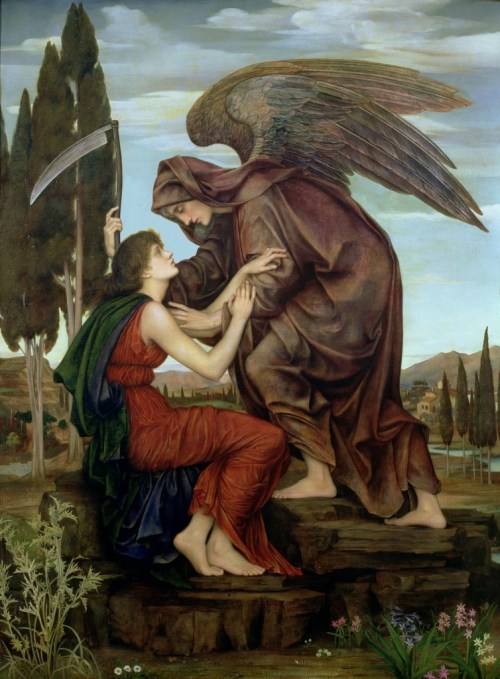
Thanatos was the primordial Greek god of death. "Angel of Death" by Evelyn DeMorgan, 1881.

To continue our Halloween theme this month, let’s take a look at another phobia. Thanatophobia is the fear of death. Thanatos was the primordial Greek god of death. It was said that he appeared to mortals when the time for them to die was imminent in order to guide them to the Underworld. No one could escape death, therefore Thanatos was feared by all.

Thanatos is often depicted in art as a young man with wings, symbolizing the ability to guide souls to the Underworld. Other symbols include a sheathed sword representing a peaceful passing and a reversed torch representing the end of life.

Other words that are derived from Thanatos are “thanatology” and “euthanasia.”