Harry Potter Spells – Sectumsempra

Harry finds "sectumsempra" scribbled in his borrowed potions book. Photo from harrypotter.wikia.com

During the next couple of weeks, I would like to explore some spells utilized in Harry Potter. Sectumsempra is a curse created by Severus Snape, the Half-Blood Prince.

Sectumsempra can be broken down into two different Latin words – sectum meaning cut and semper meaning always. Sectumsempra most likely means “always cut.”

In Harry Potter and the Half-Blood Prince, Harry casts the spell, then watches in horror as “blood spurted from Malfoy’s face and chest as though he had been slashed with an invisible sword” (Page 522).

Harry Potter Characters – Severus Snape

Severus Snape definitely lives up to his name! Photo from harrypotter.wikia.com

Let’s explore another charactonym used in Harry Potter! If you recall, a charactonym is a name that suggests a certain trait about a fictional character. Severus Snape is the feared Potions Master of Hogwarts and later becomes the Defense against the Dark Arts teacher.

The Latin word severus means strict and Severus Snape definitely lives up to his name. Snape is described as a “teacher with greasy black hair, a hooked nose, and sallow skin” (Pg 126). “His eyes … were cold and empty and made you think of dark tunnels (Pg 136). He “criticized almost everyone” (Pg 139) and especially loved to deduct points from Gryffindor for any minor offense. According to Ron, he could “turn very nasty” so it was probably best not to anger him (Pg 139).

*Quotes cited from Harry Potter and the Sorcerer’s Stone by J.K. Rowling.

bibliophile (bi-blē-ə-ˌfī-əl)

Books are my great love!

Happy Valentine’s Day! Today is all about love, so I have decided to write about one of my great loves – books. I am a bibliophile.

A bibliophile is a  lover of books. Bibliophile contains the Greek roots bibli- meaning book andphil meaning love of. The root phil- can occur at the beginning of words such as philanthropy or at the end of words like bibliophile.

I enjoy reading many different genres of books but my favorite books are those in the Harry Potter series by J.K. Rowling. I have read these books countless times and I am captivated by the author’s use of Latin throughout the series. As a student of Latin, I find that the books are much more interesting because of the clever utilization of Latin.  I also love that the author makes many references to Greek mythology! During the next few weeks I would like to explore the Latin that occurs in the Harry Potter series as well as references to Greek mythology.  If you have never read Harry Potter, I strongly recommend reading these amazing books! If you are a Harry Potter fan, I hope you enjoy my series of posts on this topic.


philanthropy (fə̇ˈlan(t)thrəpē)

Students at my school participate in Penny Wars to raise money for charity.

This season is all about giving back to those in need. Every year, students at my school participate in an event called Penny Wars. During the Penny Wars, teachers and students are divided into three teams according to their birthdays. We drop pennies, nickels, dimes, and quarters in jars to raise money for charity. At the end of the event, the team with the most money has the privilege of deciding where to donate all of the money. Last year’s winning team donated the money to Heifer International.

Merriam Webster defines the word philanthropy as Goodwill toward one’s fellowmen especially as expressed through active efforts to promote human welfarePhilanthropy contains the Greek roots phil- meaning love of and anthrop- meaning man. The word philanthropy literally means “love of man.” 

Name That Animal: Challenge #1

What would you name this "dog bird?"

This semester, I am taking a fabulous etymology class called The Witty Wordsmith. Recently, the instructor challenged the class to name weird animals that people had created using Photoshop. We had to use our knowledge of Greek and Latin roots to name the animals. I had a lot of fun doing this assignment so I have created my own challenge and I hope you all enjoy it.

Pretend that you are a scientist and you have just discovered this new species of bird and you have the privilege of naming your species. Scientists usually name new species by using Greek or/and Latin roots because the prefixes, stems, and suffixes are just like building blocks that you can utilize in countless ways.

Your challenge is to name the unique animal in the picture above using your knowledge of Greek and Latin roots. Keep in mind that you can use characteristics like size, color, or shape to name the animal. Feel free to search my blog to find root words to help you or use the list below.

Greek:
cyno                            dog
cephal                        head
soma, somat           body
pter                             wing, feather
ornith, ornis            bird

Latin:
avi                              bird
can                            dog

Submit your names by leaving me a comment!

nyctophobia (nik-tuh-foh-bee-uh)

The decorations in my neighborhood are fun to look at and the people handing out candy are very nice.

Happy Halloween! I am excited to go trick-or-treating tonight in my Bellatrix Lestrange costume. For those of you unfamiliar with Bellatrix, she is an evil character in the Harry Potter series. I’m glad I don’t have nyctophobia, otherwise I couldn’t go out tonight or any night!

Nyctophobia comes from the Greek root nyct- meaning night and the suffix –phobia meaning abnormal fear of. Nyctophobia literally means “abnormal fear of the night.”

Are you dressing up this year? If you are, be sure to comment and tell me about your costume!

myrmecophobia (mərmə̇kō fōbia)

Myrmecophobia is the abnormal fear of ants. Image from baynature.org

Let’s explore another phobia this week! My friend Caroline commented that she is afraid of ants. The fear of ants is called myrmecophobia.

Myrmecophobia comes from the Greek root myrmeco– meaning ant and the suffixphobia meaning abnormal fear of. It literally means “abnormal fear of ants.”

Do you have a phobia? If you do, be sure to leave me a comment!

acrophobia (a-krə-ˈfō-bē-ə)

I had to overcome my acrophobia to ride this Ferris Wheel in Chicago's Navy Pier.

To continue our Halloween theme, let’s explore another phobia this week. I have an extreme fear of heights, also known as acrophobia. I feel dizzy and sick when I am in a tall building looking out the window, or when I am in a car driving on a bridge. Acrophobia comes from the Greek root acro- meaning top most, tip and the suffix -phobia meaning abnormal fear of. Acrophobia is an “abnormal fear of heights.”

triskaidekaphobia (tri skī dekəˈfōbēə)

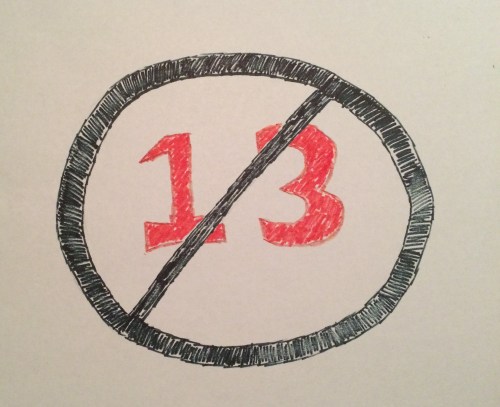
Triskaidekaphobia is the fear of the number thirteen

Happy October! Since Halloween is coming up at the end of the month, I thought it would be interesting to explore different phobias, or fears people may have. Have you ever noticed that some buildings don’t have a thirteenth floor? That’s because many people consider the number thirteen unlucky. The fear of the number thirteen is called triskaidekaphobia.

Triskaidekaphobia comes from the Greek roots tris– meaning three, deka-, meaning ten, and the suffix –phobia meaning abnormal fear of. Kai is the Greek word for “and.” The word literally means “abnormal fear of ten and three.”

Are you a triskaidekaphobe? What are you afraid of? Let me know and I will try to explore words based on your fears.

ornithology (ornəˈthäləjē)

The bird feeder is unusually quiet. We often see chirping birds during the day.

Ever since my dad placed a bird feeder outside of our dining room window, we have seen many different songbirds.  Every evening during dinner, we are entertained by cardinals, Carolina chickadees, titmouses, house finches, bluejays, and several kinds of sparrows. My favorite birds to watch are cardinals because they are so colorful. Ornithology is the study of birds.  It comes from the Greek roots, ornitho- meaning bird and –logy meaning study of. Do any of you have a bird feeder? If you do, what is your favorite bird to watch?