Harry Potter Characters – Severus Snape

Severus Snape definitely lives up to his name! Photo from harrypotter.wikia.com

Let’s explore another charactonym used in Harry Potter! If you recall, a charactonym is a name that suggests a certain trait about a fictional character. Severus Snape is the feared Potions Master of Hogwarts and later becomes the Defense against the Dark Arts teacher.

The Latin word severus means strict and Severus Snape definitely lives up to his name. Snape is described as a “teacher with greasy black hair, a hooked nose, and sallow skin” (Pg 126). “His eyes … were cold and empty and made you think of dark tunnels (Pg 136). He “criticized almost everyone” (Pg 139) and especially loved to deduct points from Gryffindor for any minor offense. According to Ron, he could “turn very nasty” so it was probably best not to anger him (Pg 139).

*Quotes cited from Harry Potter and the Sorcerer’s Stone by J.K. Rowling.

Harry Potter Characters – Argus Filch


Let’s look at another example of how J.K. Rowling incorporates references to Greek mythology in the Harry Potter series.

Argus Filch is the despised caretaker of Hogwarts.  He is named after the Greek mythological character Argus Panoptes, the obedient watchman of Hera. Panoptes comes from the Greek roots pan- meaning all and -opt meaning eye or vision. Argus (the mythological character) had 100 eyes all over his body that enabled him to see everything around him at all times while Argus Filch seems to see everything that is out of place at Hogwarts at all times.  “Filch knew the secret passageways of the school better than anyone … and could pop up…suddenly” just in time to catch students breaking rules (Page 133). The students disliked him very much; Harry stated that something “even worse than Peeves, if that was possible, was the caretaker, Argus Filch” (Page 132).

Filch’s loyal companion was a cat named Mrs. Norris, who acted as another pair of eyes for him.  The students absolutely detested her because if they broke “a rule in front of her, put just one toe out of line, … she’d whisk off for Filch”(Page 132) and “…it was the dearest ambition of many to give Mrs. Norris a good kick” (Page 133) for she was so annoying.

Quotes cited from Harry Potter and the Sorcerer’s Stone.

bibliophile (bi-blē-ə-ˌfī-əl)

Books are my great love!

Happy Valentine’s Day! Today is all about love, so I have decided to write about one of my great loves – books. I am a bibliophile.

A bibliophile is a  lover of books. Bibliophile contains the Greek roots bibli- meaning book andphil meaning love of. The root phil- can occur at the beginning of words such as philanthropy or at the end of words like bibliophile.

I enjoy reading many different genres of books but my favorite books are those in the Harry Potter series by J.K. Rowling. I have read these books countless times and I am captivated by the author’s use of Latin throughout the series. As a student of Latin, I find that the books are much more interesting because of the clever utilization of Latin.  I also love that the author makes many references to Greek mythology! During the next few weeks I would like to explore the Latin that occurs in the Harry Potter series as well as references to Greek mythology.  If you have never read Harry Potter, I strongly recommend reading these amazing books! If you are a Harry Potter fan, I hope you enjoy my series of posts on this topic.


mnemonic (nēˈmänik)

I recently competed in my school spelling bee and it was a lot of fun! Sometimes, when I study for spelling bees, it is really hard to remember how to spell certain words so I have to use mnemonic devices. Mnemonics are memory aids people use to remember things.

For example, I know how to spell principal by remembering that the head of school is my “pal.” How can you tell the difference between tempura (food you eat) and tempera (the paint)? I remember that “u eat tempura.” 🙂

The word mnemonic comes from the Greek root mnem meaning remembrance, memory.

Do you find mnemonic devices helpful? If so, I would love to hear some of your tricks to remembering things.

polyglot (pälē glät)

Happy New Year! My New Year’s resolution is to continue to improve my Hindi using Rosetta Stone. I have a strong interest in learning Hindi because I have lots of family in India. Hindi is one of the official languages of India and is spoken by nearly 500 million people. Some other languages I would like to learn are Mandarin, Japanese, German, and Telugu.

I hope to become a polyglot one day. A polyglot is a person who knows many different languages. Polyglot comes from the Greek roots poly- meaning many and glot meaning tongue, language.

Are there any languages you would like to learn?  Are any of you polyglots? If so, what languages do you speak?

Name That Animal: Challenge #1

What would you name this "dog bird?"

This semester, I am taking a fabulous etymology class called The Witty Wordsmith. Recently, the instructor challenged the class to name weird animals that people had created using Photoshop. We had to use our knowledge of Greek and Latin roots to name the animals. I had a lot of fun doing this assignment so I have created my own challenge and I hope you all enjoy it.

Pretend that you are a scientist and you have just discovered this new species of bird and you have the privilege of naming your species. Scientists usually name new species by using Greek or/and Latin roots because the prefixes, stems, and suffixes are just like building blocks that you can utilize in countless ways.

Your challenge is to name the unique animal in the picture above using your knowledge of Greek and Latin roots. Keep in mind that you can use characteristics like size, color, or shape to name the animal. Feel free to search my blog to find root words to help you or use the list below.

Greek:
cyno                            dog
cephal                        head
soma, somat           body
pter                             wing, feather
ornith, ornis            bird

Latin:
avi                              bird
can                            dog

Submit your names by leaving me a comment!

nyctophobia (nik-tuh-foh-bee-uh)

The decorations in my neighborhood are fun to look at and the people handing out candy are very nice.

Happy Halloween! I am excited to go trick-or-treating tonight in my Bellatrix Lestrange costume. For those of you unfamiliar with Bellatrix, she is an evil character in the Harry Potter series. I’m glad I don’t have nyctophobia, otherwise I couldn’t go out tonight or any night!

Nyctophobia comes from the Greek root nyct- meaning night and the suffix –phobia meaning abnormal fear of. Nyctophobia literally means “abnormal fear of the night.”

Are you dressing up this year? If you are, be sure to comment and tell me about your costume!

myrmecophobia (mərmə̇kō fōbia)

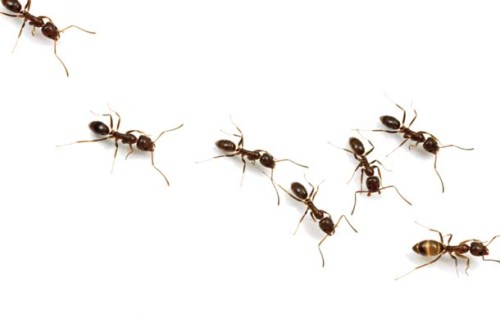
Myrmecophobia is the abnormal fear of ants. Image from baynature.org

Let’s explore another phobia this week! My friend Caroline commented that she is afraid of ants. The fear of ants is called myrmecophobia.

Myrmecophobia comes from the Greek root myrmeco– meaning ant and the suffixphobia meaning abnormal fear of. It literally means “abnormal fear of ants.”

Do you have a phobia? If you do, be sure to leave me a comment!

pachyderm (pakə̇ˌdərm)

When I visited India last year, I was lucky enough to watch a religious procession led by two majestic elephants go past my house*. Elephants, rhinoceroses, and hippopotamuses are often described as pachyderms, referring to their thick skin. Pachyderm contains the Greek roots pachy– meaning thick and –derm meaning skin. My favorite pachyderm is the elephant.

There used to be 350 species of elephants, but today there are only two kinds of elephants left, the Asian elephant and the African elephant. The African elephants are the larger of the two types. Asian elephants typically have small ears and rarely have tusks.

Female elephants live in herds and the oldest female is the matriarch. She leads and guides the herd to food and water. When males become adults, they get kicked out of the herd by the matriarch and either wander about by themselves or join a small group of other males.

Elephants are endangered meaning that they are at risk of dying out. Elephants suffer from habitat loss and ivory poaching. Sadly, people are still poaching elephants for their beautiful ivory tusks, even though it is illegal. Elephants are considered a keystone species which means that they are particularly important to the environment. They make trees fall and then eat them, giving smaller plants a chance to grow. These smaller plants provide food for other animals. If elephants became extinct, that would be a shame because they are such beautiful, intelligent creatures.

I hope you enjoy the pictures in this post; my parents took them during a trip to Zambia and Botswana a few years ago.

*Even though I enjoyed the procession in India, I think that elephants should be allowed to roam wild and be free from human control.

ornithology (ornəˈthäləjē)

The bird feeder is unusually quiet. We often see chirping birds during the day.

Ever since my dad placed a bird feeder outside of our dining room window, we have seen many different songbirds.  Every evening during dinner, we are entertained by cardinals, Carolina chickadees, titmouses, house finches, bluejays, and several kinds of sparrows. My favorite birds to watch are cardinals because they are so colorful. Ornithology is the study of birds.  It comes from the Greek roots, ornitho- meaning bird and –logy meaning study of. Do any of you have a bird feeder? If you do, what is your favorite bird to watch?