osteopoikilosis (ästēōpȯikə̇lōsə̇s)

My dad is a radiologist and he suggested that we start our medical theme with the word osteopoikilosis. Some diseases are best shown with medical imaging, which is what my dad is an expert in. This disease is a great example.

Osteopoikilosis is also known as “spotted bone disease.” Bone is made of two major parts: the cortical bone, which is on the outside, and the medullary bone, which is on the inside. When cortical bone forms islands inside the medullary bone in multiple locations in the body, osteopoikilosis occurs.

The disease is associated with symptoms such as joint pains, rashes, syndactyly (when digits fuse together), and dwarfism. It has a characteristic look on x-ray with bone islands concentrated around joints.

Osteopoikilosis comes from the Greek roots osteo- meaning bone, and poikilo- meaning spotted or variegated. The suffix -osis meaning condition of. Osteopoikilosis literally means “condition of spotted bone.”

Name That Animal: Challenge #3

What would you name this unique animal? Image from pinterest.

It has been a while since I have posted a Name That Animal Challenge, so here is Challenge #3!

Pretend that you are a scientist and you have just discovered this new species and you have the privilege of naming it. Scientists usually name new species by using Greek or/and Latin roots because the prefixes, stems, and suffixes are just like building blocks that you can utilize in countless ways.

Your challenge is to name the unique animal in the picture above using your knowledge of Greek and Latin roots. Keep in mind that you can use characteristics like size, color, or shape to name the animal. Feel free to search my blog to find root words to help you or use the list below.

Greek:

hipp                            horse

cephal                       head

pter                             wing

lepid                           scale

micr*                          small                                *used as a prefix

morph                       form, shape

Latin:

mari                            sea

equ                             horse

corp                            body

capit                           head

*- iform                      shape                        *used as a suffix

I came up with hippolepidopter or scaly winged horse. The letter “o” is the most common way to link Greek roots. The letter “i” is used to link Latin roots.

It’s not too late to participate in Name That Animal Challenge #1 and Name That Animal Challenge #2. Have fun!

cucurbitophobia (kyü-ˈkər-bətə-fō-bē-ə)

Happy Halloween! I had a fabulous time trick-or-treating in my spookily decorated neighborhood this evening. Almost every house that we visited had pumpkins decorating their porch. If I had cucurbitophobia, I would not have had a very good time tonight.

Cucurbitophobia is the fear of gourds. Pumpkins, squash, and watermelon are examples of gourds. The word curcubit comes from the Latin word cucurbita,  meaning gourd or cup. Cucurbitophobia comes from the word cucurbit, and phobia- meaning abnormal fear of.


thanatophobia (than-ət-ə-ˈfō-bē-ə)

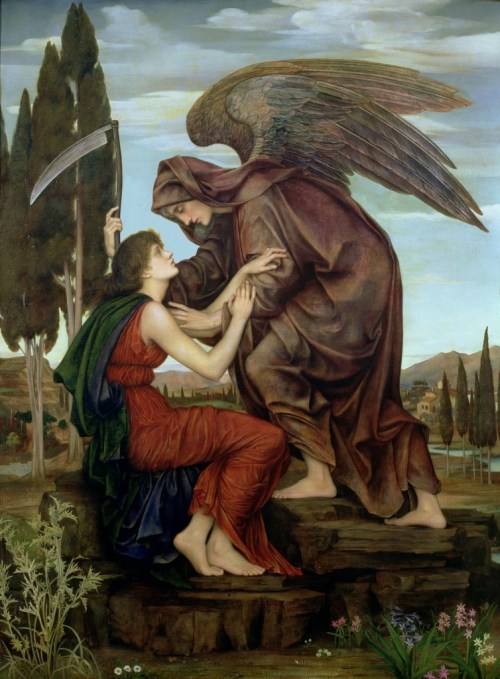
Thanatos was the primordial Greek god of death. "Angel of Death" by Evelyn DeMorgan, 1881.

To continue our Halloween theme this month, let’s take a look at another phobia. Thanatophobia is the fear of death. Thanatos was the primordial Greek god of death. It was said that he appeared to mortals when the time for them to die was imminent in order to guide them to the Underworld. No one could escape death, therefore Thanatos was feared by all.

Thanatos is often depicted in art as a young man with wings, symbolizing the ability to guide souls to the Underworld. Other symbols include a sheathed sword representing a peaceful passing and a reversed torch representing the end of life.

Other words that are derived from Thanatos are “thanatology” and “euthanasia.”

ailurophobia (ī-ˌlu̇r-ə-ˈfō-bē-ə)

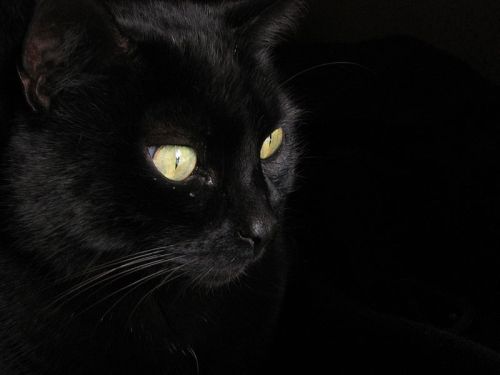
Ailurophobia is the fear of cats. "Gato negro" by Chosovi. Distributed under license CC BY-SA 2.5 via Wikimedia Commons.

As Halloween approaches, people are busy decorating their houses with scary looking spiders, skeletons, and witches. Images of black cats are also a common decoration for Halloween; I see black cats with haunting eyes everywhere! In the United States, black cats are considered bad luck. But in other countries, like Japan, black cats are thought to bring good luck. For the last several months, a black cat has been roaming around in our yard. We see him almost every day. I like to think that this means that we will have good fortune!

Ailurophobia is the abnormal fear of cats. Ailurophobia comes from the Greek roots ailur- meaning cat and phobia meaning abnormal fear of. I know many more ailurophiles than ailurophobes – which one are you?

iatrophobia (īa‧trə-ˈfōbē-ə)

Iatrophobia is the fear of doctors.

Halloween is approaching at the end of the month and I am so excited! This is one of my favorite holidays; it’s a day to dress up in costumes and go trick-or-treating. It is the only day of the year my mom allows my sister and I to eat lots of candy and stay up later than usual.

Last year, I explored phobias during the month of October, and I thought it would be fun to continue the theme.

One of my biggest fears is going to the *pediatrician’s office, especially when I need to get vaccinated. I feel dizzy and nauseous when a needle approaches. Iatrophobia is the abnormal fear of doctors. It comes from the Greek roots iatro– meaning physician or medicine and –phobia meaning abnormal fear of.

Do any of you have iatrophobia?

*The root word –iatr can be found hiding in the middle of words, such as in the word pediatrician – a doctor who specializes in children’s medicine.

If you want to explore other phobias I’ve written about, search my blog with the key word “phobia”.

petroglyph (pe‧trəˌglif)

I hope you all enjoyed my previous post on pahoehoe! During our visit to the Big Island of Hawai’i, we hiked over fields of pahoehoe to see the ancient Pu’u Loa petroglyphs in Hawai’i Volcanoes National Park.

The word petroglyph contains the Greek roots petro– , meaning rock, and glyph, meaning carving or engraving. Petroglyph literally means “rock carving.”

The Pu’u Loa petroglyphs were carved many centuries ago by native Hawaiians. Since the ancient Hawaiians didn’t have a written language, they created petroglyphs to express what was important to each of them. I was in awe of the sheer number of petroglyphs; this site contains approximately 15,000 images that have been engraved in pahoehoe. Some of the images we saw included human forms, insects, and geometric shapes. We spent a lot of time poring over the images and contemplating the meaning behind the petroglyphs.

eulogy (yüləjē)

A eulogy is a speech or composition in praise of someone, especially one who has recently passed away. Eulogy comes from the Greek roots eu meaning good and log meaning word. It literally means “good words.”

Midas was an adorable 14-year-old canine member of our family who passed away unexpectedly on July 23, 2015. Midas was a Tibetan Spaniel, an intelligent and loyal breed of dog that originated in the monasteries of Tibet over 2000 years ago. He was a beautiful golden color and was named after King Midas from Greek mythology who had the golden touch.

Midas was the best dog ever! I will miss him sitting near me as I studied for spelling bees or did my homework. He was always the first one to greet my dad with wagging tail and joyful yelps after a long day of work. My sister misses feeling his soft fur and hearing the pitter-patter of his paws on the hardwood floors. My mom will never forget how he needed to hide his stuffed animal pig after he ate.  We all smile thinking about how he would spend a long time trying to figure out where to hide his precious pig, only to hide it in the middle of the floor!

His favorite activity was waiting for the mailman, even on Sunday, so that he could attack the mail as it came through the mail slot. In Tibet, Tibetan Spaniels would perch atop the monastery towers and alert the monks when they saw people approaching. True to his breed, Midas would always alert us when he saw anyone approaching the house. He did not like strangers but he sure did love his family.

We know that Midas loved us as much as we loved him. We are all sad that he is gone, but he will never be forgotten.

agathokakological (a-gə-thō-ka-kə-lä-ji-kəl)

Darth Vader is agathokakological; he is both good and bad. Image from www.starwars.com

Happy Fourth of July everyone! I hope you all are having a great summer so far. This summer, I plan to watch all of the Star Wars movies again to prepare for the new movie, The Force Awakens, which premieres at  the end of the year. One of the most interesting characters in the series is the agathokakological Darth Vader because he not only looks cool, he is also a skilled pilot as well as an accomplished light saber duelist. Agathokakological is an adjective that means composed of both good and bad. The word comes from the Greek roots agatho meaning good and kako meaning bad.

Darth Vader starts out as Anakin Skywalker, a Jedi Knight who protects the Republic and helps to prevent the Separatists from dominating the galaxy. But then, he is tempted by the Dark Side by Emperor Palpatine, also known as Darth Sidious. Sidious corrupts Anakin and successfully turns him to the Dark Side. Anakin then becomes the feared Darth Vader and spreads terror throughout the Empire. However, at the end of the sixth movie, Darth Vader shows that there is still good in him when he saves his son, Luke, from being killed by the evil Darth Sidious. 

Are you a Star Wars fan? If so, who is your favorite character?

Name That Animal: Challenge #2

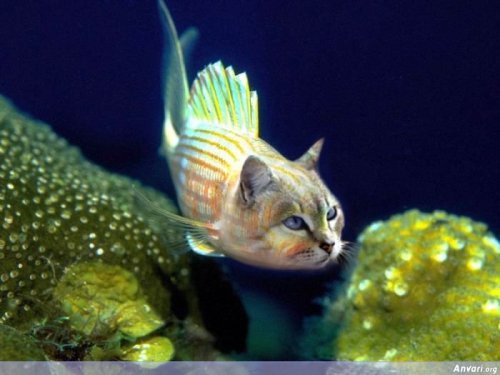
What would you call this "cat fish"? Image via sharenator.com

I am officially on summer vacation!! My family and I are getting ready to go on our annual road trip to Louisiana to visit my grandparents, but before I depart, I want to leave you all with a Name That Animal Challenge! If you did not get a chance to participate in my previous Name That Animal Challenge and would like to, go to Name That Animal Challenge: #1.

Pretend that you are a scientist and you have just discovered this new species of fish and you have the privilege of naming this unusual species. Scientists usually name new species by using Greek or/and Latin roots because the prefixes, stems, and suffixes are just like building blocks that you can utilize in countless ways.

Your challenge is to name the unique animal in the picture above using your knowledge of Greek and Latin roots. Keep in mind that you can use characteristics like size, color, or shape to name the animal. Feel free to search my blog to find root words to help you or use the list below.

Greek:

ichthy                           fish

cephal                          head

branch                         gills               *combining form is branchio-

morph                         form, shape

ailuro                           cat

Latin:

pisci                            fish

-iform                       shape               *used as a suffix

feli                              cat

corp                          body

I came up with ailurocephaloichthyomorph or cat headed fish form. I decided to use just Greek components and I linked each root with an o, the most common Greek connector. If you decide to use Latin, you may want to connect your roots with the letter unless the root already has the i connected like pisci.

Be creative and have fun! I can’t wait to read what you all come up with!