bibliophile (bi-blē-ə-ˌfī-əl)

Books are my great love!

Happy Valentine’s Day! Today is all about love, so I have decided to write about one of my great loves – books. I am a bibliophile.

A bibliophile is a  lover of books. Bibliophile contains the Greek roots bibli- meaning book andphil meaning love of. The root phil- can occur at the beginning of words such as philanthropy or at the end of words like bibliophile.

I enjoy reading many different genres of books but my favorite books are those in the Harry Potter series by J.K. Rowling. I have read these books countless times and I am captivated by the author’s use of Latin throughout the series. As a student of Latin, I find that the books are much more interesting because of the clever utilization of Latin.  I also love that the author makes many references to Greek mythology! During the next few weeks I would like to explore the Latin that occurs in the Harry Potter series as well as references to Greek mythology.  If you have never read Harry Potter, I strongly recommend reading these amazing books! If you are a Harry Potter fan, I hope you enjoy my series of posts on this topic.


 

mnemonic (nēˈmänik)

I recently competed in my school spelling bee and it was a lot of fun! Sometimes, when I study for spelling bees, it is really hard to remember how to spell certain words so I have to use mnemonic devices. Mnemonics are memory aids people use to remember things.

For example, I know how to spell principal by remembering that the head of school is my “pal.” How can you tell the difference between tempura (food you eat) and tempera (the paint)? I remember that “u eat tempura.” 🙂

The word mnemonic comes from the Greek root mnem meaning remembrance, memory.

Do you find mnemonic devices helpful? If so, I would love to hear some of your tricks to remembering things.

polyglot (pälē glät)

Happy New Year! My New Year’s resolution is to continue to improve my Hindi using Rosetta Stone. I have a strong interest in learning Hindi because I have lots of family in India. Hindi is one of the official languages of India and is spoken by nearly 500 million people. Some other languages I would like to learn are Mandarin, Japanese, German, and Telugu.

I hope to become a polyglot one day. A polyglot is a person who knows many different languages. Polyglot comes from the Greek roots poly- meaning many and glot meaning tongue, language.

Are there any languages you would like to learn?  Are any of you polyglots? If so, what languages do you speak?

philanthropy (fə̇ˈlan(t)thrəpē)

Students at my school participate in Penny Wars to raise money for charity.

This season is all about giving back to those in need. Every year, students at my school participate in an event called Penny Wars. During the Penny Wars, teachers and students are divided into three teams according to their birthdays. We drop pennies, nickels, dimes, and quarters in jars to raise money for charity. At the end of the event, the team with the most money has the privilege of deciding where to donate all of the money. Last year’s winning team donated the money to Heifer International.

Merriam Webster defines the word philanthropy as Goodwill toward one’s fellowmen especially as expressed through active efforts to promote human welfarePhilanthropy contains the Greek roots phil- meaning love of and anthrop- meaning man. The word philanthropy literally means “love of man.” 

nyctophobia (nik-tuh-foh-bee-uh)

The decorations in my neighborhood are fun to look at and the people handing out candy are very nice.

Happy Halloween! I am excited to go trick-or-treating tonight in my Bellatrix Lestrange costume. For those of you unfamiliar with Bellatrix, she is an evil character in the Harry Potter series. I’m glad I don’t have nyctophobia, otherwise I couldn’t go out tonight or any night!

Nyctophobia comes from the Greek root nyct- meaning night and the suffix –phobia meaning abnormal fear of. Nyctophobia literally means “abnormal fear of the night.”

Are you dressing up this year? If you are, be sure to comment and tell me about your costume!

myrmecophobia (mərmə̇kō fōbia)

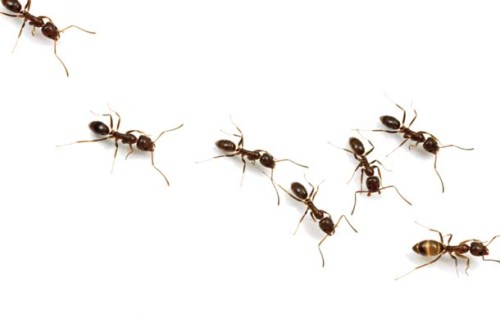
Myrmecophobia is the abnormal fear of ants. Image from baynature.org

Let’s explore another phobia this week! My friend Caroline commented that she is afraid of ants. The fear of ants is called myrmecophobia.

Myrmecophobia comes from the Greek root myrmeco– meaning ant and the suffixphobia meaning abnormal fear of. It literally means “abnormal fear of ants.”

Do you have a phobia? If you do, be sure to leave me a comment!

acrophobia (a-krə-ˈfō-bē-ə)

I had to overcome my acrophobia to ride this Ferris Wheel in Chicago's Navy Pier.

To continue our Halloween theme, let’s explore another phobia this week. I have an extreme fear of heights, also known as acrophobia. I feel dizzy and sick when I am in a tall building looking out the window, or when I am in a car driving on a bridge. Acrophobia comes from the Greek root acro- meaning top most, tip and the suffix -phobia meaning abnormal fear of. Acrophobia is an “abnormal fear of heights.”

triskaidekaphobia (tri skī dekəˈfōbēə)

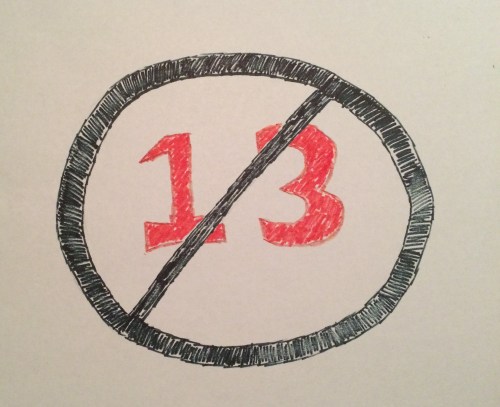
Triskaidekaphobia is the fear of the number thirteen

Happy October! Since Halloween is coming up at the end of the month, I thought it would be interesting to explore different phobias, or fears people may have. Have you ever noticed that some buildings don’t have a thirteenth floor? That’s because many people consider the number thirteen unlucky. The fear of the number thirteen is called triskaidekaphobia.

Triskaidekaphobia comes from the Greek roots tris– meaning three, deka-, meaning ten, and the suffix –phobia meaning abnormal fear of. Kai is the Greek word for “and.” The word literally means “abnormal fear of ten and three.”

Are you a triskaidekaphobe? What are you afraid of? Let me know and I will try to explore words based on your fears.

pachyderm (pakə̇ˌdərm)

When I visited India last year, I was lucky enough to watch a religious procession led by two majestic elephants go past my house*. Elephants, rhinoceroses, and hippopotamuses are often described as pachyderms, referring to their thick skin. Pachyderm contains the Greek roots pachy– meaning thick and –derm meaning skin. My favorite pachyderm is the elephant.

There used to be 350 species of elephants, but today there are only two kinds of elephants left, the Asian elephant and the African elephant. The African elephants are the larger of the two types. Asian elephants typically have small ears and rarely have tusks.

Female elephants live in herds and the oldest female is the matriarch. She leads and guides the herd to food and water. When males become adults, they get kicked out of the herd by the matriarch and either wander about by themselves or join a small group of other males.

Elephants are endangered meaning that they are at risk of dying out. Elephants suffer from habitat loss and ivory poaching. Sadly, people are still poaching elephants for their beautiful ivory tusks, even though it is illegal. Elephants are considered a keystone species which means that they are particularly important to the environment. They make trees fall and then eat them, giving smaller plants a chance to grow. These smaller plants provide food for other animals. If elephants became extinct, that would be a shame because they are such beautiful, intelligent creatures.

I hope you enjoy the pictures in this post; my parents took them during a trip to Zambia and Botswana a few years ago.

*Even though I enjoyed the procession in India, I think that elephants should be allowed to roam wild and be free from human control.

Metamorphosis (metə-morfəsə̇s)

My sister recently received caterpillars for her sixth birthday. The hungry caterpillars arrived in a jar with food, and we were able to observe them as they went through the different stages of their life cycle. A week after they arrived, the caterpillars became chrysalides, and underwent metamorphosis. Ten days later, they emerged as beautiful Painted Lady butterflies. We were in awe as we watched this amazing process occur before our eyes. Metamorphosis contains the Greek roots meta- meaning change and -morph meaning form. The suffix -osis means a process or condition. The roots and the suffix tell us that metamorphosis means “the process of changing form.” Animals that undergo metamorphosis are butterflies, moths, and frogs.