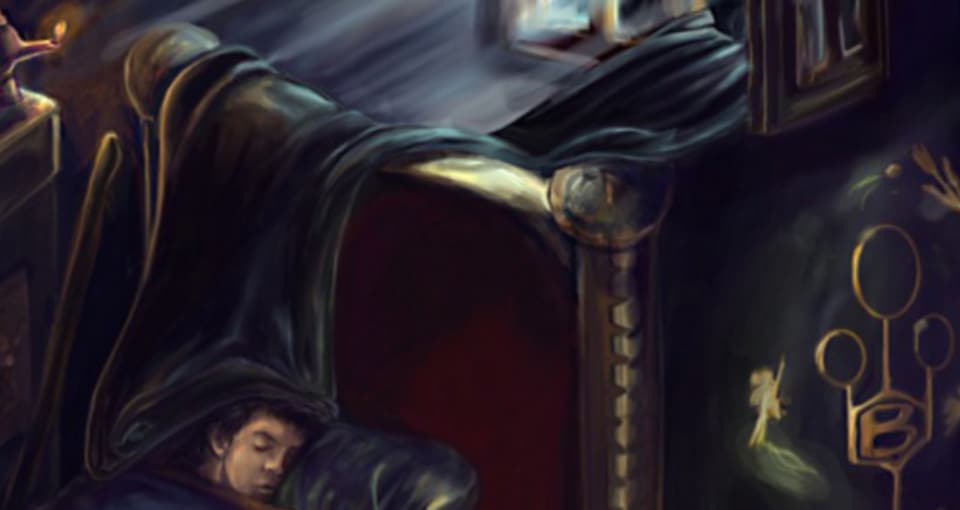
In Fantastic Beasts and Where To Find Them, Newt Scamander states that a Lethifold is a very rare creature that dwells in tropical climates. A Lethifold looks like a black cloak that floats along ominously during the night seeking victims who are sleeping. Once its prey has been suffocated thoroughly, it simply digests them in their beds, leaving no trace of its victims.
Since Lethifolds are stealthy killers, it is difficult to find much information about them. However, Flavius Belby, who survived a Lethifold attack, wrote the earliest account of Lethifolds in 1782. During the attack, Belby writes that he tried to overcome the Lethifold by using a Stupefying Charm and an Impediment Hex, neither of which worked. Finally, Belby cast the Patronus Charm, which repelled the Lethifold successfully.
The Ministry of Magic rates these highly dangerous creatures XXXXX, meaning that they are known to kill wizards and it is not possible to train or domesticate them.
Lethifold contains the Latin root leth-, meaning deadly or fatal. Leth- was probably influenced by the Greek word “lethe,” referring to the mythological river in the Underworld whose waters caused spirits to forget everything about their former lives. It makes sense that the word “lethe” would later influence the Latin “leth-” because if a person forgets who he is and loses all his memories, he loses his sense of self which is similar to death. Since the Lethifold is a deadly creature, this name seems apropos.
Join me next week as we continue exploring fantastic creatures from the Harry Potter world. I hope you are all enjoying these posts as much as I am enjoying writing them!






Leave a Reply